
If you are searching for hair fall treatment in Nallagandla because you are seeing more hair in the shower, a widening part, a receding hairline or a bald patch, the useful first question is not “Which treatment should I book?” It is “What is causing the hair loss?”
Hair fall is a symptom, not one diagnosis. Temporary shedding after illness can behave very differently from hereditary pattern hair loss, alopecia areata, traction alopecia or inflammatory scalp disease.
At Varniqa Skin Sciences' trichology service in Nallagandla, hair and scalp concerns are assessed clinically and may include trichoscopy when appropriate.
Is Some Hair Fall Normal?
Yes. Hair naturally cycles through growth, transition and resting phases, so some daily shedding is expected. The American Academy of Dermatology notes that losing around 50 to 100 hairs a day can be normal for many people.
Instead of trying to count every strand, notice changes from your own usual pattern:
- A suddenly fuller shower drain or comb
- Reduced ponytail volume
- A widening centre part
- Temple recession
- More scalp becoming visible
- Round or irregular bald patches
- Persistent shedding over several months
Hair Shedding and Hair Loss Are Not Always the Same
Excessive shedding may happen when more hairs than usual move into the resting phase. One common example is telogen effluvium, which can appear after illness, fever, surgery, childbirth, substantial weight loss or major stress.
Progressive hair loss may instead involve gradual follicle miniaturisation, inflammation or other processes. Pattern hair loss, for example, tends to develop gradually and may continue without treatment.
What Are the Common Causes of Hair Fall?
1. Male or female pattern hair loss
Hereditary pattern hair loss is among the most common causes of hair loss. Men may notice a receding hairline or thinning at the crown. Women may notice overall thinning or a widening part. Earlier assessment can be useful because progressive miniaturisation may continue over time.
2. Telogen effluvium
Telogen effluvium usually causes diffuse shedding rather than one sharply defined bald patch. A trigger may have occurred weeks or months before the shedding becomes noticeable, which is why the connection is not always obvious.
Possible triggers include significant illness or fever, surgery, childbirth, major emotional stress, rapid weight loss and nutritional problems.
3. Alopecia areata
Alopecia areata is an autoimmune condition in which the immune system attacks hair follicles. It often begins as one or more smooth, round or oval bald patches and can affect the scalp, beard, eyebrows, eyelashes or other hair-bearing areas.
4. Thyroid, hormonal and medical conditions
Thyroid disease and some hormonal disorders can be associated with thinning or shedding. In women, hair loss occurring with irregular menstrual cycles or other hormonal symptoms may need further medical evaluation.
5. Nutritional deficiency
Low intake or deficiency of nutrients such as iron, protein, zinc or biotin can contribute to hair loss in selected patients. This does not mean every person with hair fall needs a supplement. Testing and supplementation should be based on the clinical picture rather than a generic “hair vitamin” approach.
6. Tight hairstyles and traction
Repeated tension from tightly pulled hairstyles can cause traction alopecia. Long-standing pulling can eventually lead to permanent loss in affected follicles, so persistent recession around stressed areas should not be ignored.
7. Scalp inflammation or scarring alopecia
Some inflammatory scalp conditions can damage hair follicles. Scarring alopecias are especially important to recognise because destroyed follicles cannot regrow hair. Pain, burning, persistent redness, scale, crusting or rapidly changing areas of hair loss deserve medical assessment.
Can Stress Cause Hair Fall?
Major physical or psychological stress can contribute to excessive shedding in some people. However, it is risky to automatically label every case as “stress hair fall.” Ongoing thinning, patterned loss, bald patches or scalp symptoms can point to another diagnosis.
Why Does Hair Fall Happen After Fever or Illness?
A significant illness can shift more hairs into the resting phase of the hair cycle. Noticeable shedding may then occur later rather than during the illness itself. Because of that delay, people sometimes miss the connection.
Temporary shedding can improve as the trigger resolves, but persistent or severe hair loss should still be assessed rather than assumed to be temporary.
Is Hair Fall After Pregnancy Normal?
Increased shedding after childbirth is common and is usually related to changes in the hair cycle after pregnancy. For many women it improves over time. Persistent thinning, however, may coexist with other concerns such as nutritional deficiency, thyroid disease or pre-existing pattern hair loss.
When Should You See a Dermatologist for Hair Fall?
Consider a dermatologist assessment if you notice:
- Sudden or heavy shedding
- Hair fall continuing for several months
- Progressive thinning or a widening part
- A receding hairline
- Round or irregular bald patches
- Loss of eyebrows or eyelashes
- Scalp pain, burning, redness, scaling or crusting
- Hair loss with other medical symptoms
- Hair loss that is causing significant concern
Some forms of hair loss respond better when the cause is identified earlier, especially conditions that progressively damage follicles.
How Does a Dermatologist Diagnose Hair Fall?
A hair-loss consultation usually begins with the pattern and timeline, not with a procedure. The dermatologist may ask about:
- When the shedding or thinning began
- Whether it was sudden or gradual
- Recent illness, fever or surgery
- Pregnancy or childbirth
- Major weight or diet changes
- Stress
- Current medicines and supplements
- Family history of hair loss
- Menstrual or hormonal symptoms
- Hair-care and hairstyle practices
- Itching, scaling, pain or other scalp symptoms
The scalp is then examined for the distribution of loss, density, inflammation, broken hairs, miniaturisation and other clues.
What Is Trichoscopy?
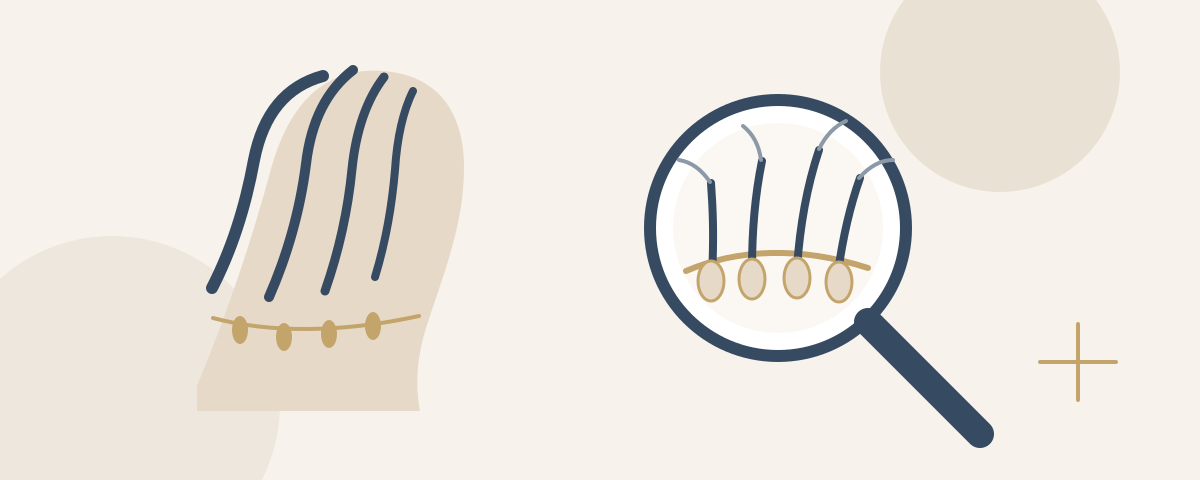
Trichoscopy is a magnified examination of the scalp and hair. It allows a dermatologist to evaluate features that may not be easy to see with the naked eye and can support the distinction between different hair-loss patterns.
At Varniqa Skin Sciences, trichoscopy may form part of a hair and scalp assessment when clinically useful.
Do You Need Blood Tests for Hair Fall?
Not everyone needs the same panel of blood tests. Depending on the history and examination, a dermatologist may consider investigations for selected contributors such as thyroid disease, iron deficiency or other nutritional or hormonal concerns.
Testing should answer a clinical question. Ordering a large routine panel for every person with hair fall is not the same as diagnosing the cause.
How Is Hair Fall Treated?
There is no single treatment for every type of hair loss. Treatment depends on the diagnosis and may include:
- Treating an underlying scalp disorder
- Appropriate topical treatment
- Selected oral medication when medically indicated
- Correction of a confirmed nutritional deficiency
- Changes to damaging hair-care or traction practices
- Management of contributing medical conditions
- Selected procedures in appropriate patients
- Monitoring with clinical photographs or repeat examination
For people with established pattern hair loss who are exploring surgical restoration, Varniqa also has a separate hair transplant service. A transplant is not a general treatment for every cause of shedding and should follow diagnosis and candidacy assessment.
Does Everyone With Hair Fall Need PRP or a Procedure?
No. A procedure is not automatically the correct first step. A person with temporary telogen effluvium, autoimmune alopecia, scalp inflammation and hereditary pattern loss can each require a different approach.
The useful sequence is diagnosis → appropriate treatment → monitoring, not procedure first and diagnosis later.
Can Hair Fall Be Stopped Permanently?
There is no honest universal answer. Some temporary shedding improves after its trigger resolves. Hereditary pattern hair loss often needs ongoing management. Scarring alopecia can permanently damage follicles, making early recognition particularly important.
Be cautious with any product or treatment promising guaranteed permanent regrowth regardless of the cause.
Hair Fall Treatment in Nallagandla
Varniqa Skin Sciences provides dermatologist-led assessment for hair and scalp concerns in Nallagandla, Gopanpalle and nearby West Hyderabad neighbourhoods. The clinic is led by Dr. Manvitha Poluri, MBBS, MD (DVL), Founder and Chief Consultant Dermatologist, Trichologist and Hair Transplant Surgeon.
Patients commonly visit from Nallagandla, Gopanpalle, Tellapur, Serilingampally, Lingampally, Gachibowli, Kondapur and the Financial District.
Experiencing Persistent Hair Fall?
If you are noticing persistent shedding, progressive thinning, a widening part, bald patches or scalp symptoms, consider having the cause assessed before repeatedly changing shampoos, supplements or procedures.
Varniqa Skin Sciences
Second Floor, Hytek Arcade, Block A, Kanchi Gachibowli Road, Gopanpalle, Nallagandla, Hyderabad, Telangana 500046
Clinic hours: 10:00 am – 8:00 pm, seven days a week
Call / WhatsApp: +91 90001 53463
Sources
Medical information notice
This article provides general patient education and is not a diagnosis, prescription or substitute for an individual medical consultation.

Clinical care at Varniqa Skin Sciences
Dr. Manvitha Poluri · MBBS, MD (DVL)
Founder and Chief Consultant Dermatologist, Trichologist and Hair Transplant Surgeon at Varniqa Skin Sciences, Nallagandla. This article is published as clinic patient education; individual diagnosis and treatment require consultation.