
Hair transplant in Nallagandla
Surgical hair restoration, when it is the right answer. Candidacy is assessed honestly, because a transplant performed on unstable hair loss produces a result that unravels within a few years.
What this covers
- FUE and FUT techniques
- Hairline restoration
- Crown thinning
- Donor area assessment
- Graft planning
- Post-transplant care
Who is a candidate — and who is not
Suitability depends on the pattern and stability of your hair loss, the density of your donor area, your age and your general health. A transplant moves existing permanent hair; it does not create new hair. The donor area is a finite resource, and once it is spent it does not replenish.
Hair loss that is still actively progressing is the common reason to wait. Transplanting into an area that continues to thin around the grafts produces an isolated island of transplanted hair — a result that looks worse over time, not better. In that situation medical treatment first, to stabilise the loss, is the correct sequence.
FUE and FUT
FUE — follicular unit extraction — removes individual follicular units directly from the donor area, leaving small dot scars distributed across it. It suits shorter hairstyles and smaller sessions, and recovery of the donor area is generally quicker.
FUT — follicular unit transplantation — removes a strip of scalp from which units are dissected under magnification, leaving a single linear scar concealed by surrounding hair. It can yield a large number of grafts in one session and preserves donor density efficiently.
Neither is universally better. Which suits you depends on the number of grafts required, your donor density, how you wear your hair and how you would rather the donor area scar.
The timeline nobody mentions in advertising
Transplanted hairs typically shed within the first few weeks. This is expected and is not a failed procedure — the follicle remains and re-enters a growth phase afterwards. Visible regrowth generally begins some months later, and the final result is judged around a year after surgery.
This means the honest assessment of a transplant is made a long time after the photographs usually taken to sell one.
A transplant moves hair you already have. The donor area is finite, and once it is spent it does not replenish.
What to expect
The route from first message to review.
-
Candidacy assessment
Trichoscopy, donor density, the pattern and stability of your loss, and your general health — before any surgery is planned.
-
Stabilise first, where needed
Where hair loss is still active, medical treatment comes first so the transplanted result is not undermined by continuing loss around it.
-
Planning and consent
Technique, graft numbers, hairline design, realistic outcome, risks and cost, all agreed before the date is set.
-
Surgery and aftercare
The procedure, then detailed aftercare and scheduled reviews across the first year while the result develops.
A transplant is not a cure for hair loss
Surgery redistributes hair you already have. It does not stop the process that caused the loss, so hair outside the transplanted area can continue to thin unless that process is treated medically.
Most people who have a transplant also need ongoing medical treatment to protect their remaining native hair. If that is not explained to you somewhere, it is being left out.
Questions about this service
Am I a suitable candidate for a hair transplant?
Suitability depends on the pattern and stability of your hair loss, the density of your donor area, your age and your general health. Not everyone experiencing hair loss is a candidate, and where loss is still actively progressing, medical treatment to stabilise it first is usually the better sequence. This is assessed at consultation before any surgery is planned.
What is the difference between FUE and FUT for me specifically?
FUE extracts follicular units individually and leaves small scattered dot scars, which suits shorter hairstyles and smaller sessions. FUT removes a strip and leaves one linear scar concealed by surrounding hair, and can yield a large number of grafts efficiently in a single session. The right choice depends on how many grafts you need, your donor density and how you wear your hair, and is decided together at the consultation.
When will the transplanted hair actually grow?
Transplanted hairs usually shed within the first few weeks after surgery. This is expected and does not mean the graft has failed — the follicle stays in place and re-enters a growth phase. Visible regrowth generally begins some months afterwards, and the final result is assessed at around a year.
Will I still need medication after a transplant?
Usually, yes. A transplant relocates hair but does not stop the underlying process causing the loss, so native hair outside the transplanted area can continue to thin. Ongoing medical treatment to protect that remaining hair is part of a properly planned result rather than an optional extra.
Medical information notice
This page describes how these conditions are generally assessed and treated at Varniqa. It is general information, not a diagnosis or a treatment recommendation for you specifically, and it cannot replace a consultation. Outcomes vary between individuals.
Related services
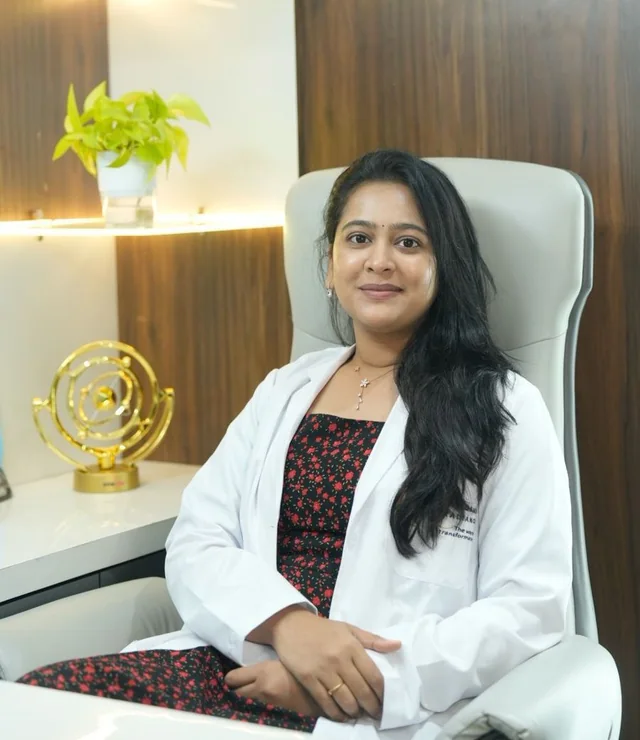
Reviewed by the clinic’s dermatologist
Dr. Manvitha Poluri · MBBS, MD (DVL)
Founder and Chief Consultant Dermatologist at Varniqa Skin Sciences, Nallagandla. This page was last reviewed on .
Start with a consultation
Describe the concern in your own words. Working out which treatment it needs is the clinic's job.