
Laser hair reduction on Indian skin: what decides the result
The same treatment, at the same setting, does not behave the same way on every skin tone. Melanin is the reason — and understanding what it changes is most of what separates a good course of laser hair reduction from a burn or a brown mark.
On this page
Why melanin makes this a different conversation
Laser hair reduction works by aiming light at the pigment inside the hair follicle. The pigment absorbs that light, converts it to heat, and the heat damages the structures that grow the hair. The whole procedure rests on one thing: the follicle absorbing more energy than the skin around it.
Indian and South Asian skin carries more melanin in the epidermis — the surface layer the light has to pass through before it reaches anything. That surface melanin absorbs energy too. It competes with the target, it heats up, and skin that heats up unnecessarily can blister, or can respond by producing still more pigment.
So the energy that is comfortably effective on paler skin can be too much on deeper skin, and the setting that is safe on deeper skin may be too gentle to achieve anything on hair that is fine or sparse. There is no universal setting. A clinic running one protocol on everybody is not treating the variable that matters most.
The wavelength is chosen for your skin
Different laser wavelengths behave differently in skin. As a general rule, longer wavelengths travel deeper and are absorbed less strongly by the melanin sitting at the surface, which is why they tend to be preferred as skin tone deepens. Shorter wavelengths are absorbed more avidly by pigment, making them efficient on fair skin and less forgiving on brown skin.
This is also where the difference between a laser and an intense pulsed light device matters. IPL is not a laser: it emits a broad band of wavelengths rather than a single one, which makes it harder to keep energy away from surface pigment. It has its uses, but on deeper skin tones it is the less controllable option.
Alongside wavelength, the settings that get adjusted are pulse duration, fluence and cooling. A longer pulse spreads the same energy over more time, so the follicle heats while the skin around it has a chance to shed heat, and contact cooling protects the epidermis during the pulse. None of this is chosen from a menu — which device and which parameters suit you is decided at the assessment, after your skin has actually been looked at. The page on laser treatments in Nallagandla describes how that assessment runs.
Laser reads hair colour, not hair thickness
Because the target is pigment in the hair, the colour of the hair decides whether laser can work at all:
- Dark, coarse hair on lighter skin is the easiest case — a strong target with little competition.
- Dark, coarse hair on brown skin responds well, but the wavelength and settings have to be chosen deliberately. This is the most common situation seen here.
- White, grey and blonde hair has little or no melanin to absorb the light. Laser does very little to it, whatever the device, and a course sold on the promise that it will is a course sold on nothing.
- Fine vellus hair — the soft, downy hair on the face — is a poor target, and on the face it can occasionally respond in the wrong direction.
Thickness affects how many sessions are needed and how obvious the change is. Colour affects whether there is any point starting.
When the hair itself is a symptom
Unwanted hair is usually just hair. But facial or body hair in a woman that has appeared recently, is spreading in a male pattern, or has grown noticeably coarser over months deserves a medical look before it is treated cosmetically. Polycystic ovary syndrome is the most common reason; thyroid disorders, certain medicines and, less often, other hormonal conditions can also be responsible.
This is not an argument against laser. It is an argument for sequencing. Laser removes the hair that exists; it does not alter what is driving new hair to grow, so an untreated hormonal cause tends to show up later as steady regrowth that gets blamed on the treatment. Where the history suggests it, a dermatologist assesses or investigates that first — see medical dermatology — and the two are then managed together rather than one being sold as a fix for the other.
Rapid coarsening of hair growth, particularly alongside other changes such as voice deepening or menstrual irregularity, should be assessed medically before any cosmetic treatment is booked.
The four weeks before your first session
Preparation is not a formality here. It changes whether the session does anything at all.
Stop waxing, threading, plucking and epilating. Roughly four weeks beforehand, and for the length of the course. All of these pull the hair out of the follicle, and the laser needs a hair in the follicle to carry heat down to it. Arriving for a session a week after threading generally wastes the session.
Shave instead. Shaving and trimming cut the hair at the surface and leave the follicle intact, so they are fine between sessions and are usually asked for the day before. Depilatory creams are best avoided close to a session because of the irritation they leave behind.
Let a tan settle. Recent sun exposure loads the epidermis with fresh melanin and raises the risk of a burn or a pigment change. In Hyderabad this is not a seasonal footnote — a fortnight of daily commuting on a two-wheeler is enough to change what is safe on your forearms.
Mention every medicine and supplement. Some antibiotics, acne medication, herbal preparations and other drugs increase sensitivity to light. Recent isotretinoin, an active infection in the area, and pregnancy all affect whether or when a session should go ahead.
The risks that are specific to deeper skin
Laser hair reduction is well established and generally well tolerated. Redness and small raised bumps around the follicles for a few hours afterwards are normal. The complications worth knowing about are these:
- Post-inflammatory hyperpigmentation. The most common problem on brown skin: a darker patch where the treatment was, appearing days afterwards. It usually fades over weeks to months, faster with sun protection, but it is precisely why conservative settings and test patches exist. It is the same process described on the page about melasma and pigmentation.
- Hypopigmentation. Lighter patches. Less common than the reverse, and slower to recover.
- Blistering and crusting. Uncommon, and usually a sign that the energy was too high for that skin, or that the skin had recently been tanned.
- Paradoxical hypertrichosis. An uncommon but recognised effect in which fine hair around the treated area becomes coarser rather than finer. It is reported more often on the face and neck and in deeper skin types, which is a further reason facial treatment is approached carefully.
- Aggravation of existing pigment conditions. Heat and inflammation can worsen melasma, so its presence changes the plan rather than being ignored.
A test patch — treating a small area first and reviewing it before committing to a full session — is the practical answer to most of this. It costs a visit, and it is worth the visit.
Why it is a course, and what finished means
Hair grows in cycles, and laser only affects follicles that are in their active growth phase at the moment they are treated. Only a portion of the hair in any area is in that phase at a given time, which is why one session cannot treat all of it, and why sessions are spaced several weeks apart — the interval is timed to the growth cycle of the area, so a face is not treated on the same schedule as a back.
The honest name for the procedure is hair reduction, not removal. A completed course substantially and durably reduces how much hair there is and how coarse it is. Some regrowth over the following years is normal, occasional maintenance sessions are usual, and a hormonal driver makes maintenance more likely. How many sessions you need depends on the area, your skin type, your hair and how you respond, and it is confirmed after assessment rather than quoted as a package beforehand.
Between sessions, the single thing that most affects your result is sun protection on the treated area. It is not aftercare advice bolted on at the end. It is part of the treatment.
Medical information notice
This article is general information about how laser hair reduction is assessed and performed on Indian and South Asian skin. It is not a diagnosis, and it is not a treatment recommendation for you. Whether laser suits your skin, your hair and your medical history can only be decided after a clinical examination. Outcomes vary between individuals.
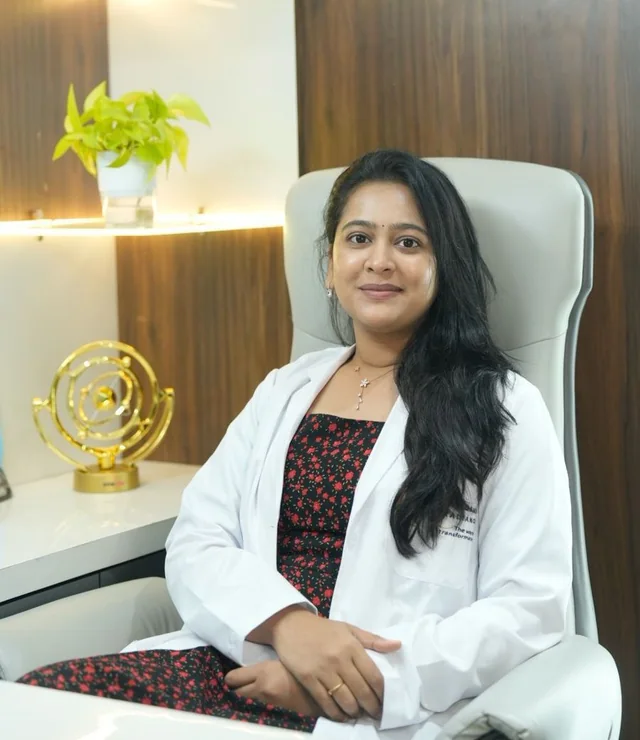
Reviewed by the clinic's dermatologist
Dr. Manvitha Poluri · MBBS, MD (DVL)
Founder and Chief Consultant Dermatologist at Varniqa Skin Sciences, Nallagandla. Trichologist and hair transplant surgeon, with over five years of clinical experience across paediatric, cosmetic, aesthetic and surgical dermatology. Every article here is reviewed by her before it is published.
Common questions
Can I wax, thread or pluck between laser sessions?
No. Waxing, threading, plucking and epilating pull the hair out of the follicle, and the laser needs a hair present in the follicle to carry heat down to it. Removing hair by the root in the weeks before a session largely wastes that session. Shaving and trimming are fine throughout a course, because they cut the hair at the surface and leave the follicle intact.
Does laser hair reduction work on white, grey or very fine hair?
Poorly, and often not at all. The laser targets melanin, the pigment inside the hair, so hair that has lost its pigment gives it almost nothing to act on. Fine, downy vellus hair is a weak target for the same reason. Dark, coarse hair responds best, and a clinic offering a full course for white or grey hair is promising more than the technology can do.
Is it safe to have laser hair reduction on tanned skin?
It is safer to wait. A recent tan puts extra melanin in the surface layer of the skin, which absorbs energy meant for the follicle and raises the risk of burning or of a pigment change afterwards. Sessions are usually deferred until a tan has settled, and sun protection between sessions is treated as part of the treatment rather than as advice.
Should unwanted facial hair be investigated before laser treatment?
Sometimes. Facial hair in a woman that is new, spreading in a male pattern or coarsening over months can point to a hormonal cause such as polycystic ovary syndrome or a thyroid disorder. Laser removes the hair that is already there but does not change what is driving new hair to grow, so where the history suggests a cause it is assessed first and the two are managed together.
Can laser treatment make hair grow more instead of less?
Rarely, yes. Paradoxical hypertrichosis is an uncommon but recognised effect in which fine hair at or around the treated area becomes coarser rather than finer. It is reported more often on the face and neck and in deeper skin types. It is one reason facial areas are treated conservatively and reviewed as the course progresses rather than run to a fixed protocol.
Related services
Find out whether laser suits your skin
Skin type, hair colour, medication and medical history all change the answer. Twenty minutes of assessment settles what an evening of reading cannot.