
Laser treatments in Nallagandla
Laser is a tool, not a treatment plan. Which laser, at what setting, and whether laser is the right answer at all depends on your skin type and on what is actually being treated.
What this covers
- Laser hair removal — properly, hair reduction — for unwanted facial and body hair
- Pigmentation and melasma
- Acne scarring
- Skin texture
- Certain vascular lesions
Skin type comes first
Indian and South Asian skin contains more melanin, and melanin absorbs laser energy. That is what makes laser effective on pigment, and it is also what creates the risk: too much energy, or the wrong wavelength, and the result is post-inflammatory hyperpigmentation — a darker mark than the one you came in with.
Parameters are therefore set conservatively, and a test patch may be performed before a full session. A clinic that runs the same settings on every skin type is not accounting for the single most important variable.
What a session involves
The area is cleansed and, for some treatments, a topical anaesthetic is applied. Eye protection is worn. The handpiece is passed over the area in sections; most people describe the sensation as a rapid snap of heat rather than a sharp pain, though this varies by treatment and by area.
Immediately afterwards the skin is usually pink and feels warm, similar to mild sunburn, and this generally settles within hours to a day. Sun protection afterwards is not optional — it is the main thing that determines whether the result holds.
Why it takes a course
Hair grows in cycles and laser only affects follicles in the active growth phase, which is why a single session cannot treat all of them. Pigment and scarring similarly respond to gradual, repeated stimulus rather than to one aggressive session.
Sessions are spaced several weeks apart. The number required depends on your skin type, the area, the condition and how you respond, and is confirmed at the consultation rather than sold as a fixed package beforehand.
Melanin is what makes laser effective on pigment. It is also what makes the wrong setting leave a darker mark than the one you arrived with.
What to expect
The route from first message to review.
-
Assessment and skin typing
Your skin type, the condition being treated, your medical history and any medication that affects light sensitivity.
-
Test patch where appropriate
A small area treated first, so the response is known before a full session is performed.
-
Course of sessions
Spaced several weeks apart to match the biology, with the response reviewed as the course progresses.
-
Maintenance and protection
Sun protection throughout, and a realistic conversation about what maintenance the result will need.
The risks, stated plainly
Laser treatment carries a risk of temporary redness and swelling, blistering, and changes in pigmentation that can be darker or lighter than surrounding skin. In deeper skin tones, post-inflammatory hyperpigmentation is the most common of these.
Most such changes settle with time and treatment, but they are real, and they are the reason for conservative settings, test patches and honest candidacy assessment.
Questions about this service
Is laser hair removal permanent?
It is a reduction rather than a removal, which is why the procedure is properly called laser hair reduction. A completed course substantially and durably reduces the amount and thickness of hair, but some regrowth over time is normal and occasional maintenance sessions are usually needed. Any clinic promising permanent removal is overstating what the technology does.
Is laser safe on Indian and South Asian skin?
Yes, when the wavelength and settings are chosen for the skin type and the operator understands the risk. Higher melanin content raises the risk of post-inflammatory pigmentation, so energy is set conservatively, a test patch may be used first, and sun protection between sessions is treated as part of the treatment rather than as advice.
How many sessions will I need?
Most laser treatments require a course rather than a single session, typically spaced several weeks apart to work with the skin's healing and hair growth cycles. The exact number depends on your skin type, the area, the condition being treated and how you respond, and is confirmed at consultation.
How much does it hurt?
Most people describe it as a rapid snap of heat against the skin rather than a sharp pain. Sensitive areas, and treatments using higher energy, are more uncomfortable than others, and a topical anaesthetic can be applied beforehand for some procedures. Tolerance varies genuinely between individuals.
Medical information notice
This page describes how these conditions are generally assessed and treated at Varniqa. It is general information, not a diagnosis or a treatment recommendation for you specifically, and it cannot replace a consultation. Outcomes vary between individuals.
Related services
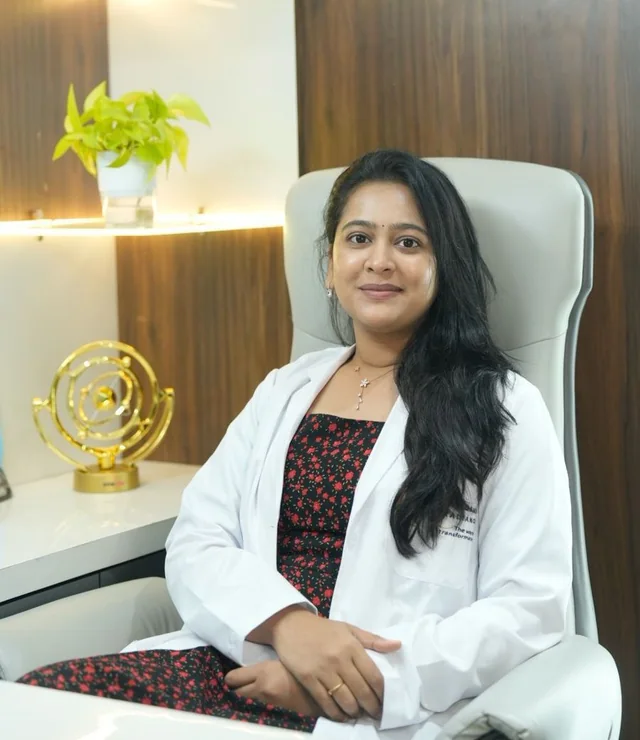
Reviewed by the clinic’s dermatologist
Dr. Manvitha Poluri · MBBS, MD (DVL)
Founder and Chief Consultant Dermatologist at Varniqa Skin Sciences, Nallagandla. This page was last reviewed on .
Start with a consultation
Describe the concern in your own words. Working out which treatment it needs is the clinic's job.