
Aesthetic medicine in Nallagandla
Non-surgical facial treatment, prescribed and performed by a dermatologist after an assessment — not selected from a menu and delegated to a technician.
What this covers
- Fine lines and wrinkles
- Volume loss and contour
- Skin texture
- Dullness and dark spots
- Open pores
- Early signs of ageing
What is offered
Botulinum toxin for dynamic lines — the ones that appear on movement. Dermal fillers for volume loss and contour. Chemical peels for texture and pigmentation, at strengths chosen for your skin type. Medical-grade rejuvenation for overall quality, tone and texture.
These are prescription medical procedures. They carry real contraindications and real risks, and they are assessed accordingly rather than booked like an appointment at a salon.
Why it matters who holds the needle
Facial anatomy is the whole job. The difference between a good result and a complication is knowing which structures lie beneath the point of injection, recognising a problem early, and being equipped to manage it. Every procedure here is performed by Dr. Poluri, MBBS, MD (DVL).
It also means the assessment is dermatological. Skin that is actively inflamed, infected or unstable is treated first — a peel over untreated dermatitis makes the dermatitis worse, not the texture better.
Setting expectations before you commit
Results, how long they last and the number of sessions needed vary by treatment and by individual. You will be given a realistic picture of all three before anything is booked, including where the honest answer is that a treatment will not achieve what you are hoping for.
Where a concern would respond better to medical treatment than to an aesthetic procedure — pigmentation is the common example — that is what will be recommended, even though it is the less profitable answer.
Where a concern would respond better to medical treatment than to a procedure, that is what you will be told — even though it is the less profitable answer.
What to expect
The route from first message to review.
-
Assessment and goals
What is bothering you, in your words, and an examination of the skin's actual condition before any procedure is considered.
-
What is realistic
What a given treatment can and cannot change, how long it lasts, what it costs, and what the alternatives are — including doing nothing.
-
Consent and treatment
Risks and aftercare explained and agreed, then the procedure performed by the dermatologist.
-
Review
A follow-up point to assess the result and decide whether anything further is warranted.
What will not be offered
Treatment on a first visit where the assessment says the skin is not ready, packages bought in advance of a diagnosis, or a procedure whose realistic outcome does not match what you have described wanting.
If you are considering treatment before a specific event, say so at the consultation. First-time procedures are not scheduled close to one.
Questions about this service
Who actually performs the procedure?
Dr. Manvitha Poluri, MBBS, MD (DVL), performs the injectable and procedural treatments personally. These are prescription medical procedures where the outcome depends on knowledge of facial anatomy, and on being able to recognise and manage a complication early.
How long do the results last?
It varies by treatment, by the area treated and by the individual, so a single figure would be misleading. The expected duration for your specific treatment is discussed at the consultation, along with what maintenance would involve and what happens if you choose not to continue.
Is there any downtime?
It depends entirely on the procedure. Some cause nothing more than temporary redness; others involve visible peeling, swelling or bruising for several days. You will be told what to expect for your specific treatment before you agree to it, so it can be planned around your commitments rather than the other way round.
Can I have a treatment just before a wedding or event?
Not as a first treatment. Individual response varies, and some effects take days to settle or need a small adjustment afterwards, so a first-time procedure immediately before an important date is a poor risk. If an event is the reason for coming, mention it at the consultation and the timeline can be planned backwards from it.
Medical information notice
This page describes how these conditions are generally assessed and treated at Varniqa. It is general information, not a diagnosis or a treatment recommendation for you specifically, and it cannot replace a consultation. Outcomes vary between individuals.
Related services
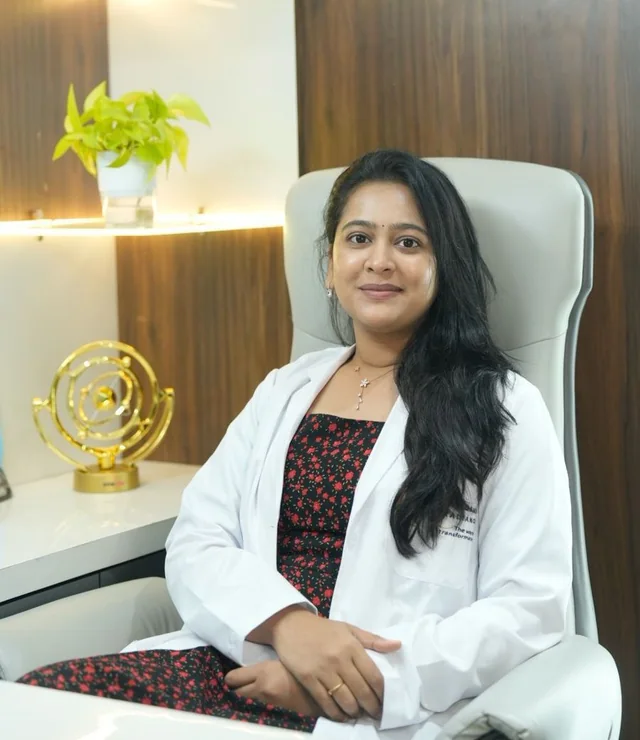
Reviewed by the clinic’s dermatologist
Dr. Manvitha Poluri · MBBS, MD (DVL)
Founder and Chief Consultant Dermatologist at Varniqa Skin Sciences, Nallagandla. This page was last reviewed on .
Start with a consultation
Describe the concern in your own words. Working out which treatment it needs is the clinic's job.