
If you are searching for acne treatment in Nallagandla because pimples keep returning, are becoming painful or are beginning to leave dark marks and scars, the first step is understanding what type of acne you have.
Acne is not simply a cosmetic concern. It is a common inflammatory skin condition involving blocked pores, excess oil production and inflammation. It can appear as blackheads, whiteheads, inflammatory pimples, pustules, nodules or cysts.
The best acne treatment depends on the type and severity of acne, your skin type, previous treatments, possible triggers and whether pigmentation or acne scarring has already developed.
At Varniqa Skin Sciences, a dermatologist in Nallagandla, acne treatment begins with a dermatologist consultation and clinical assessment rather than a standard acne package.
What Is Acne?
Acne is a skin condition that develops when pores and hair follicles become clogged with oil and dead skin cells, leading to blackheads, whiteheads, pimples and sometimes deeper inflammatory lesions.
Acne can affect:
- Face
- Forehead
- Jawline
- Chin
- Chest
- Shoulders
- Upper back
Although acne is common during adolescence, adults can also develop persistent or recurring acne.
For some patients, breakouts can continue well into adulthood or begin for the first time later in life.
What Causes Acne?
Acne can develop because of a combination of factors rather than one single cause.
Common factors include:
Excess oil production
Sebaceous glands produce sebum to protect the skin. When excess oil combines with dead skin cells, pores can become blocked.
Clogged pores
Dead skin cells can accumulate inside follicles, resulting in blackheads and whiteheads.
Inflammation
Inflammation can turn clogged pores into red, tender or painful pimples.
Hormonal changes
Hormonal changes can contribute to acne, particularly during puberty, menstrual cycles and certain hormonal conditions.
Genetics
Some people are naturally more prone to developing acne because of family history.
Certain skincare or cosmetic products
Products that are unsuitable for acne-prone skin can sometimes worsen congestion or irritation.
Certain medicines or underlying conditions
In selected cases, acne may also be associated with medication use or hormonal and medical conditions.
That is why recurrent acne should not always be treated by repeatedly changing face washes or copying someone else's skincare routine.
What Are the Different Types of Acne?
Identifying the type of acne is important because different forms of acne may require different treatment approaches.
Whiteheads
Whiteheads are closed clogged pores that usually appear as small white or skin-coloured bumps.
Blackheads
Blackheads are open clogged pores. The dark appearance does not mean the pore contains dirt.
Papules
Papules are small, red and inflamed bumps without a visible pus-filled centre.
Pustules
Pustules are inflamed lesions containing visible pus.
Nodules
Nodules are deeper, larger and often painful acne lesions.
Cystic acne
Cystic acne consists of deep inflammatory lesions that can be painful and may have a higher likelihood of causing scarring.
If you are experiencing deep, painful or repeatedly recurring acne, consulting an acne dermatologist in Nallagandla may help determine the appropriate treatment rather than continuing trial-and-error skincare.
When Should You See a Dermatologist for Acne?
You should consider seeing a dermatologist when acne is persistent, painful, worsening, affecting large areas of skin or beginning to cause pigmentation or scarring.
Book a dermatologist consultation if:
- Pimples repeatedly return
- Over-the-counter acne products are not helping
- You have painful nodules or cystic acne
- Acne is leaving dark marks
- Acne scars are starting to develop
- Breakouts cover the face, chest or back
- Acne suddenly becomes significantly worse
- Adult acne appears alongside possible hormonal symptoms
- Acne is affecting your confidence or daily life
Early control of inflammatory acne can be important because preventing new breakouts is also part of reducing the risk of additional acne scars.
Why Does My Acne Keep Coming Back?
Recurring acne usually means that the underlying acne process is still active.
Treating only the visible pimple does not necessarily prevent another blocked pore from developing.
A dermatologist may therefore create a treatment plan designed to:
- Control active breakouts
- Reduce clogged pores
- Control inflammation
- Prevent new acne lesions
- Reduce the likelihood of acne scars
- Manage pigmentation left after acne
Dermatology guidelines emphasize that acne treatment is individualized rather than one-size-fits-all.
How Is Acne Treated by a Dermatologist?
There is no single treatment that works for every person with acne.
During an acne treatment consultation in Nallagandla, a dermatologist may assess:
- Type of acne
- Severity of acne
- Areas affected
- Skin type
- Skin sensitivity
- Previous treatments
- Current skincare products
- Acne marks or pigmentation
- Existing acne scars
- Medical history
- Medication history
- Relevant hormonal symptoms
Depending on your diagnosis, treatment may include topical medicines, oral medicines, skincare changes or selected dermatological procedures.
Topical acne treatment
Depending on the diagnosis, dermatologists may use treatments containing ingredients such as:
- Retinoids
- Benzoyl peroxide
- Azelaic acid
- Other prescription topical medicines
These should be used according to medical advice because strength, combination and frequency matter.
Oral acne treatment
Moderate or severe acne may sometimes require oral treatment.
The appropriate medicine depends on factors such as severity, medical history and previous response to treatment.
Prescription medicines should not be started solely based on recommendations from social media or another person's prescription.
Dermatological procedures
Selected procedures may complement medical management for specific concerns such as pigmentation, texture or acne scars.
The procedure should be chosen according to the diagnosis rather than simply because a particular treatment is popular online.
How Long Does Acne Treatment Take?
Acne treatment usually requires consistency over several weeks or months rather than producing an overnight result.
Some patients stop treatment too early because new pimples continue to appear during the first few weeks.
A dermatologist may need to review how the skin is responding and adjust the plan over time.
Instead of changing acne products every few days, following one clinically appropriate routine consistently usually makes it easier to judge whether the treatment is helping.
Acne Marks vs Acne Scars: What Is the Difference?
Acne marks and acne scars are not always the same.
Acne marks
After a pimple settles, a flat red, brown or dark area may remain.
This is often a pigment or colour change rather than a true structural scar.
Acne scars
A true acne scar involves a change in the skin's texture or structure.
Acne scars may be:
- Depressed
- Raised
- Uneven
- Narrow and deep
- Broad and rolling
This distinction is important because acne marks treatment and acne scar treatment are not necessarily the same.
Should Active Acne Be Treated Before Acne Scars?
In many patients, yes.
Controlling active acne is generally the first priority because continuing breakouts can create additional scars.
The American Academy of Dermatology notes that acne-scar treatment typically begins after acne is controlled and measures are in place to prevent further breakouts.
Once active acne is better controlled, the dermatologist can evaluate:
- Scar type
- Scar depth
- Pigmentation
- Skin texture
- Skin type
- Appropriate procedural options
How Are Acne Scars Treated?
There is no single best acne scar treatment for every patient.
Treatment depends on the type of scar.
Different cases may involve procedures such as:
- Chemical peels
- Microneedling
- Laser treatment for acne scars
- Other dermatologist-selected scar procedures
- Combination treatment
A dermatologist may sometimes combine techniques because one patient can have more than one type of acne scar.
If you’re considering acne scar treatment in Nallagandla, the useful question is not “which laser removes acne scars?” but which type of scarring you actually have, because the type is what decides the procedure. That is covered in full in acne scars: why the type decides the treatment.
Is Laser Treatment Necessary for Acne?
No.
Laser treatment is not automatically required for active acne.
Medical treatment is often the starting point for controlling breakouts.
Lasers and other procedures may be considered for selected concerns such as:
- Acne scarring
- Pigmentation
- Uneven skin texture
At Varniqa Skin Sciences, laser selection takes skin type into account, particularly because Indian and South Asian skin can have a higher risk of post-inflammatory pigmentation when inappropriate settings are used.
Acne Treatment for Indian Skin
Indian skin frequently develops visible pigmentation after inflammation.
This means an acne treatment plan may need to address two separate problems:
1. Active acne 2. Pigmentation left after acne
This is another reason aggressive DIY treatment can create problems.
Repeatedly combining strong acids, scrubs, retinoids and spot treatments can irritate the skin.
For patients seeking acne treatment for Indian skin in Hyderabad, treatment should therefore consider both acne control and the skin's tendency to develop post-inflammatory pigmentation.
Can Hormones Cause Adult Acne?
Hormonal factors can contribute to adult acne in some patients.
Hormonal acne may commonly appear around areas such as the:
- Jawline
- Chin
- Lower face
However, the location of acne alone cannot diagnose a hormonal condition.
If new or persistent acne is accompanied by symptoms such as menstrual irregularities or increased facial or body hair, your dermatologist may recommend further medical evaluation when appropriate.
Is Diet Responsible for Acne?
Diet can influence acne in some people, but it is usually too simplistic to say that one particular food is the sole cause of acne.
Rather than immediately removing multiple foods from your diet, discuss persistent acne with a dermatologist and evaluate possible triggers in context.
Extreme or unnecessary dietary restriction should not replace appropriate acne treatment.
Does Drinking More Water Cure Acne?
Staying hydrated is important for general health, but drinking more water alone is not a medical treatment for acne.
Acne develops through several biological processes including clogged follicles, sebum production and inflammation.
Hydration should therefore be viewed as part of general health—not as a substitute for acne treatment.
Does Oily Skin Mean You Should Wash Your Face Frequently?
Not necessarily.
Aggressively washing or scrubbing acne-prone skin can irritate it.
A skincare routine should clean the skin without repeatedly stripping or traumatizing it.
Your dermatologist can advise how cleansing should fit around acne medicines and other skincare products.
Should You Pop Pimples?
It is better to avoid squeezing, scratching or picking acne lesions.
Manipulating an inflamed pimple can increase trauma to the skin and may contribute to inflammation, pigmentation or scarring.
Deep or painful acne is better assessed and treated appropriately rather than repeatedly squeezed.
Do Home Remedies Cure Acne?
Home remedies may be popular online, but popularity does not establish that a treatment is safe or effective.
Ingredients such as lemon juice, toothpaste or other irritating household products can potentially irritate facial skin.
For persistent acne, a dermatologist-guided approach is safer than continuously experimenting with untested treatments.
What Skincare Routine Is Best for Acne-Prone Skin?
The best routine depends on your diagnosis and medicines.
In general, an acne routine should remain manageable rather than containing a large number of active ingredients.
A dermatologist may help you choose:
- Appropriate cleanser
- Acne medication
- Suitable moisturizer
- Sunscreen
- Products that should be avoided
- Frequency of active ingredients
Adding more products does not automatically produce faster results.
What Happens During an Acne Consultation at Varniqa Skin Sciences?
At Varniqa Skin Sciences, Nallagandla, acne treatment begins with a clinical assessment.
Your consultation may include discussion of:
- When your acne started
- How frequently breakouts occur
- Areas affected
- Type of lesions
- Previous treatments
- Current skincare routine
- Medicines and supplements
- Pigmentation
- Acne scars
- Relevant medical or hormonal history
The treatment plan then follows the diagnosis.
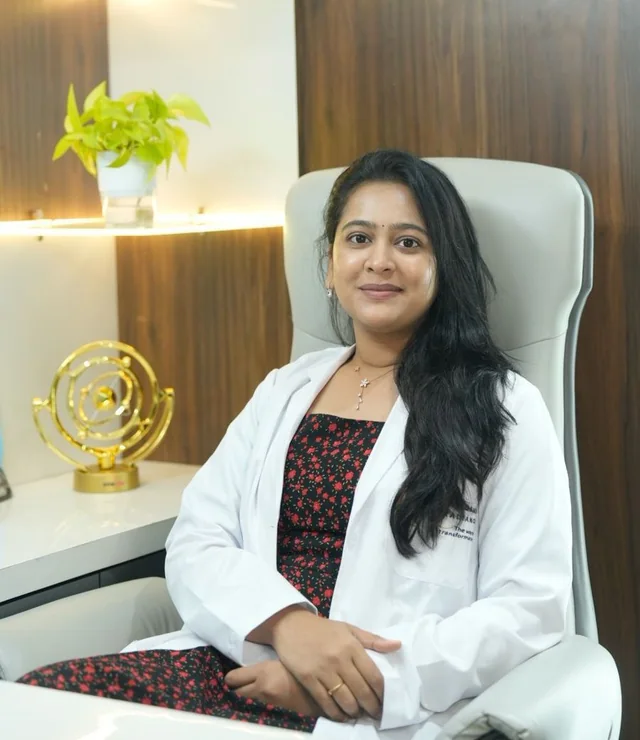
Varniqa Skin Sciences is led by Dr. Manvitha Poluri, MBBS, MD (DVL), Founder and Chief Consultant Dermatologist, and provides dermatology services in Nallagandla, aesthetic dermatology, laser treatment and hair-restoration care in Nallagandla.
Acne Treatment Near Nallagandla, Tellapur and Gopanpalle
Varniqa Skin Sciences primarily serves patients from:
- Nallagandla
- Gopanpalle
- Tellapur
- Serilingampally
- Lingampally
- Gachibowli
- Kondapur
- Financial District
- Nearby areas of West Hyderabad
Patients looking for an acne dermatologist near Nallagandla, Tellapur or Gopanpalle can book a consultation at the clinic.
Looking for Acne Treatment in Nallagandla?
If pimples keep returning, are becoming painful, or are beginning to leave marks or scars, consider getting the condition properly assessed before trying another skincare product.
At Varniqa Skin Sciences, acne treatment begins with a dermatologist evaluation so the treatment can be matched to your acne type, skin type and concerns.
Varniqa Skin Sciences Second Floor, Hytek Arcade, Block A Kanchi Gachibowli Road Gopanpalle, Nallagandla Hyderabad, Telangana 500046
Dermatologist: Dr. Manvitha Poluri, MBBS, MD (DVL)
Clinic hours: 10:00 AM – 8:00 PM, seven days a week
Call / WhatsApp: +91 90001 53463
Book an Acne Consultation in Nallagandla
If you are struggling with recurring pimples, adult acne, acne marks or acne scars, book a dermatologist consultation at Varniqa Skin Sciences in Nallagandla.
Sources
Medical information notice
This article is general education, not a diagnosis or individual treatment recommendation.
Reviewed by the clinic's dermatologist
Dr. Manvitha Poluri · MBBS, MD (DVL)
Founder and Chief Consultant Dermatologist at Varniqa Skin Sciences, Nallagandla. Trichologist and hair transplant surgeon, with over five years of clinical experience across paediatric, cosmetic, aesthetic and surgical dermatology.